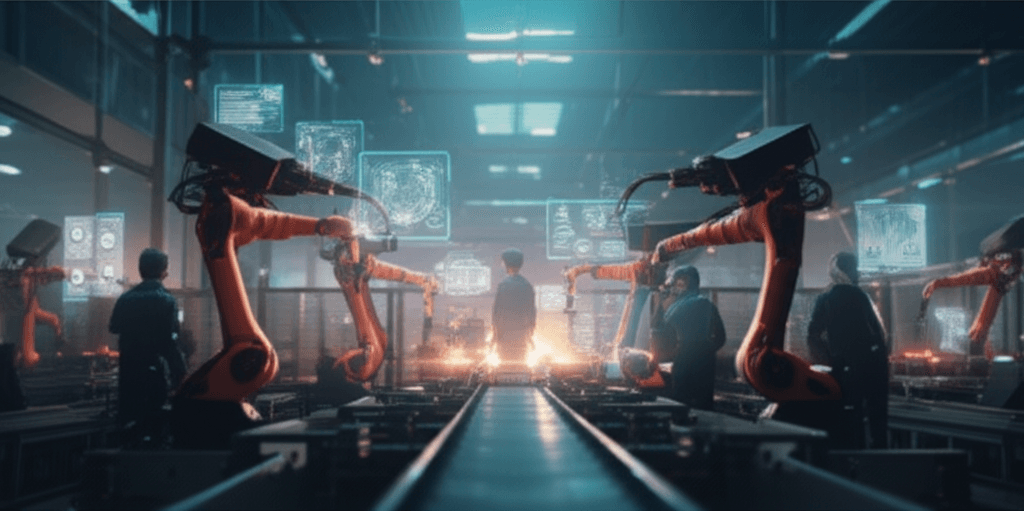
Warehouse Automation in 2026: AMRs, Pick-and-Place, and the Lights-Out Fulfillment Center
The modern warehouse is undergoing a transformation as radical as the shift from horse-drawn carts to conveyor belts. Autonomous mobile robots, AI-powered picking systems, and sophisticated warehouse management software are converging to create fulfillment centers that operate around the clock with minimal human intervention.
The Warehouse Automation Stack
Think of warehouse automation as a layered stack, where each layer builds on the one below it.
Layer 1: Warehouse Management System (WMS)
The WMS is the brain of the operation. It manages inventory, orchestrates orders, and directs robots. Modern WMS platforms like Manhattan Active, Blue Yonder, or open-source solutions like Odoo integrate directly with robotic fleets.
Layer 2: Fleet Management and Orchestration
Fleet management software coordinates dozens or hundreds of robots, handling:
- Traffic management — preventing collisions and deadlocks
- Task assignment — matching robots to orders based on location and battery level
- Charging schedules — rotating robots through charging stations
- Dynamic re-routing — adapting paths when obstacles appear
# Simplified fleet orchestration logic
class FleetManager:
    def __init__(self, robots: list, warehouse_map: Graph):
        self.robots = robots
        self.map = warehouse_map
        self.task_queue = PriorityQueue()

    def assign_tasks(self, orders: list[Order]):
        for order in orders:
            pickup_zone = self.map.get_zone(order.sku)
            # Find nearest available robot
            best_robot = min(
                [r for r in self.robots if r.status == "idle"],
                key=lambda r: self.map.distance(r.position, pickup_zone),
                default=None
            )
            if best_robot:
                path = self.map.plan_path(
                    best_robot.position,
                    pickup_zone,
                    avoid=self.get_reserved_paths()
                )
                best_robot.execute(path, task=order)

    def get_reserved_paths(self):
        """Return paths currently reserved by active robots."""
        return [r.current_path for r in self.robots if r.status == "moving"]
Layer 3: Autonomous Mobile Robots (AMRs)
AMRs are the workhorses of the modern warehouse. Unlike older automated guided vehicles (AGVs) that follow fixed paths, AMRs navigate dynamically using SLAM, LiDAR, and computer vision.
Layer 4: Robotic Arms and Picking Systems
At the workstation, robotic arms handle the physical manipulation of goods — picking items from bins, packing them into boxes, and placing labels.
AMR Technologies Compared
| Technology | Navigation | Payload | Speed | Best For |
|---|---|---|---|---|
| Locus Robotics | LiDAR + vision | Up to 270 kg | 1.8 m/s | Person-to-goods picking |
| 6 River Systems | LiDAR | Up to 90 kg | 1.5 m/s | E-commerce fulfillment |
| Geek+ | QR code + LiDAR | Up to 1000 kg | 2.0 m/s | Goods-to-person, heavy loads |
| Boston Dynamics Stretch | Vision + LiDAR | Cases up to 23 kg | 800 cases/hr | Truck unloading |
| Fetch Robotics | LiDAR + SLAM | Up to 1500 kg | 2.0 m/s | Material transport |
Goods-to-Person vs. Person-to-Goods
These are the two fundamental paradigms of warehouse picking automation.
Person-to-Goods
In this model, AMRs guide human pickers through the warehouse, indicating which items to pick and where to place them. The robot carries the tote; the human does the picking.
Advantages:
- Lower upfront cost — no racking changes needed
- Flexible — handles diverse SKUs easily
- Fast deployment — weeks, not months
- Human dexterity handles difficult picks
Disadvantages:
- Humans still walk (though 50-70% less)
- Labor dependent — still need pickers
- Throughput limited by human speed
Goods-to-Person
Here, robots bring entire shelving units or totes to a stationary picking station. The human (or robotic arm) picks items from the presented inventory.
Advantages:
- Dramatically higher throughput — 300+ picks per hour per station
- Compact storage — aisles can be narrower since humans do not enter them
- Ergonomic — no walking, bending, or reaching
- Easier to add robotic picking later
Disadvantages:
- Higher upfront investment in racking and robots
- Complex inventory management
- Single point of failure at pick stations
Robotic Picking: The Last Hard Problem
Picking individual items from a bin remains one of the hardest problems in warehouse automation. The challenge is the infinite variety of products: shiny bottles, floppy bags, tiny screws, and oddly shaped toys all need to be grasped reliably.
Approaches to Robotic Picking
Suction-based picking works well for items with flat surfaces. Vacuum grippers can achieve pick rates of 600+ items per hour for suitable SKUs.
Parallel jaw grippers handle a wider range of shapes but are slower and require more precise grasp planning.
Soft grippers using inflatable or tendon-driven fingers can conform to irregular shapes, making them ideal for produce and delicate items.
Multi-modal grippers combine suction and fingers, switching strategies based on the item. This is becoming the standard for high-SKU-count operations.
# Grasp strategy selection based on object properties
class GraspPlanner:
    def select_strategy(self, object_properties: dict) -> str:
        flatness = object_properties.get("surface_flatness", 0)
        weight = object_properties.get("weight_kg", 0)
        deformability = object_properties.get("deformability", 0)

        if flatness > 0.8 and weight < 2.0:
            return "suction"
        elif deformability > 0.6:
            return "soft_gripper"
        elif weight > 5.0:
            return "parallel_jaw"
        else:
            return "multi_modal"

    def plan_grasp(self, point_cloud, strategy: str):
        """Generate grasp poses from 3D point cloud."""
        if strategy == "suction":
            # Find largest flat region for suction placement
            normals = estimate_normals(point_cloud)
            flat_regions = find_flat_regions(normals, threshold=0.95)
            return select_centroid(flat_regions)
        elif strategy == "parallel_jaw":
            # Use GraspNet or Contact-GraspNet for antipodal grasps
            return self.grasp_network.predict(point_cloud, top_k=5)
Sortation Systems
After picking, items need to be sorted into orders. Modern sortation technologies include:
- Tilt-tray sorters — trays tilt to slide items into chutes, handling 10,000+ items per hour
- Cross-belt sorters — individual belt conveyors move items laterally at high speed
- Robotic sortation — AMRs carry items to destination bins, offering flexibility over fixed infrastructure
- Pocket sorters — hanging pouches transport items overhead, saving floor space
The Economics of Warehouse Automation
ROI Calculation Framework
When building a business case for warehouse automation, consider these factors:
- Labor savings — typically 40-60% reduction in pick labor
- Throughput increase — 2-3x improvement in orders per hour
- Accuracy improvement — from 99.0% to 99.9%+ pick accuracy
- Space utilization — 40-80% more storage in the same footprint (goods-to-person)
- Reduced damage — robots handle items consistently
Typical payback periods range from 18 to 36 months, depending on labor costs in your region and the complexity of your operation.
Phased Implementation
Smart operators deploy automation in phases:
- Phase 1: AMRs for person-to-goods picking (quick wins, low disruption)
- Phase 2: Goods-to-person stations for high-velocity SKUs
- Phase 3: Robotic picking arms at workstations
- Phase 4: Automated packing and sortation
- Phase 5: Automated truck loading and unloading
Challenges and Considerations
Peak Season Flexibility
Warehouses must handle 3-5x normal volume during peak seasons. The beauty of AMR-based systems is that you can add robots temporarily — many vendors offer Robot-as-a-Service (RaaS) models with monthly pricing.
Integration Complexity
The biggest technical challenge is not any single robot but the integration between systems. Your WMS, fleet manager, conveyor controls, pick-to-light systems, and robotic arms all need to communicate seamlessly.
Workforce Transition
Automation changes jobs rather than eliminating them. Pickers become robot supervisors, maintenance technicians, and exception handlers. Invest in training programs to retain institutional knowledge.
Looking Ahead
By 2028, we expect to see fully autonomous "dark warehouses" handling standard e-commerce fulfillment with minimal human presence. Humans will focus on exception handling, system management, and the creative problem-solving that robots still cannot match. The warehouses that invest in automation today will define the supply chains of tomorrow.