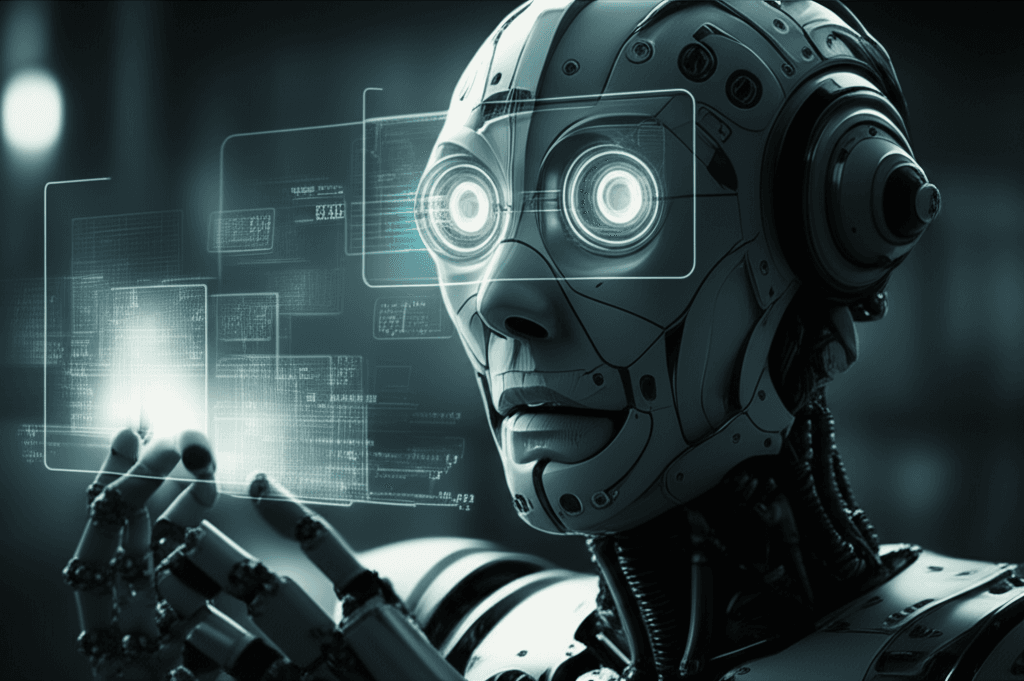
Embodied AI Foundation Models: Teaching Robots to Understand the Physical World
The dream of a single AI model that can control any robot to do any task is no longer science fiction. Embodied AI foundation models are making it reality.
What Are Embodied Foundation Models?
Traditional robotics AI is narrow: train a model to pick up cups, and it can only pick up cups. Embodied foundation models break this limitation by training on massive, diverse datasets spanning multiple robots, environments, and tasks.
The key insight: just as GPT learned general language understanding from internet text, embodied models learn general physical understanding from robot experience data.
The Architecture
Modern embodied foundation models share a common structure:
class EmbodiedFoundationModel:
    """Generic architecture for robot foundation models."""

    def __init__(self):
        # Visual backbone — pre-trained, frozen or fine-tuned
        self.vision = DinoV2(size="large")

        # Language encoder for task instructions
        self.language = SigLIPTextEncoder()

        # Action decoder — the trainable core
        self.policy = TransformerDecoder(
            layers=12,
            cross_attention=True,  # attend to vision + language
            action_dim=7,          # 6-DOF + gripper
        )

        # Action head — often diffusion-based
        self.action_head = DiffusionActionHead(
            horizon=16,    # predict 16 future steps
            denoise_steps=10,
        )

    def predict(self, images, instruction, proprioception):
        visual_tokens = self.vision(images)
        lang_tokens = self.language(instruction)
        state = self.policy(visual_tokens, lang_tokens, proprioception)
        actions = self.action_head.sample(state)
        return actions  # shape: (16, 7)
Key Models Shaping the Field
RT-2 (Google DeepMind, 2023)
The first model to demonstrate that a vision-language model could directly output robot actions. RT-2 showed emergent capabilities — robots could follow instructions involving concepts never seen during robot training, like "move the banana to the country with a flag that has stars and stripes."
Octo (UC Berkeley, 2024)
The first open-source generalist robot policy. Trained on 800,000 episodes from the Open X-Embodiment dataset spanning 22 different robot types:
- Can be fine-tuned for a new robot with just 100 demonstrations
- Supports language and goal-image conditioning
- Runs at 10 Hz on consumer GPUs
pi-zero (Physical Intelligence, 2024)
Built on flow matching rather than diffusion, enabling smoother and faster action generation. Demonstrated remarkable dexterity:
- Folding laundry from crumpled piles
- Assembling boxes from flat cardboard
- Loading and unloading dishwashers
GR-2 (NVIDIA, 2025)
Used video generation as a world model — first imagine what should happen, then act. This approach enables:
- Long-horizon planning through imagined futures
- Better generalization through visual pre-training
- Explicit reasoning about physics and object interactions
Gemini Robotics (Google DeepMind, 2026)
The latest frontier: a single multimodal model that combines Gemini's language and vision capabilities with robot action prediction. Early results show:
- Zero-shot task execution from natural language
- Multi-step reasoning about object properties
- Recovery from unexpected failures
The Data Challenge
The biggest bottleneck for embodied AI is data. Language models train on trillions of tokens from the internet. Robot models have orders of magnitude less data.
Current Data Sources
| Source | Scale | Quality | Diversity |
|---|---|---|---|
| Open X-Embodiment | 1M+ episodes | Mixed | 22 robot types |
| DROID | 76K episodes | High | 564 scenes |
| RoboSet | 100K episodes | High | Tabletop manipulation |
| Simulation (Isaac Lab) | Unlimited | Medium | Configurable |
Strategies to Scale
- Simulation — generate billions of training episodes in environments like Isaac Lab, with domain randomization for transfer
- Internet video — learn physical understanding from YouTube and other video sources
- Teleoperation — human operators controlling robots to collect high-quality demonstrations
- Cross-embodiment learning — transfer knowledge between different robot platforms
Emergent Capabilities
Like language models, embodied models show emergent capabilities at scale — abilities that weren't explicitly trained but appear naturally:
- Tool use — picking up and using tools without tool-specific training
- Failure recovery — retrying failed grasps with different strategies
- Multi-step reasoning — planning sequences of actions to achieve complex goals
- Novel object generalization — manipulating objects never seen during training
Challenges
- Safety — a robot that generalizes to new tasks might also generalize to dangerous behaviors
- Evaluation — how do you benchmark a "general" robot? COCO for robotics doesn't exist yet
- Compute — training and inference are expensive; real-time control requires efficient models
- Sim-to-real — simulated training data doesn't perfectly capture real physics
- Long-horizon tasks — current models struggle with tasks requiring many minutes of execution
What This Means for the Industry
Embodied foundation models are changing how robots are deployed:
- Before: 6-12 months to program a robot for a new task
- After: Fine-tune a foundation model with 50-100 demos in days
- Future: Zero-shot deployment from natural language instructions
This dramatically lowers the barrier to robot deployment, making automation accessible to smaller companies and new applications.
Conclusion
Embodied AI foundation models represent the most important architectural shift in robotics since deep learning. As these models scale in data, compute, and capability, we're approaching a future where a single model can make any robot do any physical task — the "GPT moment" for robotics.
Related Posts
Interview: The Future of Embodied AI with MIT CSAIL Researcher Dr. James Okonkwo
Dr. James Okonkwo of MIT CSAIL discusses embodied AI, foundation models for robotics, sim-to-real transfer, and what it takes to make robots truly intelligent.
Understanding Transformer Architecture: The Engine Powering Modern Robotics AI
A comprehensive guide to how transformer neural networks — originally designed for language — are revolutionizing robot perception, planning, and control in 2026.
OpenAI Partners with Leading Robotics Firms to Bring GPT Models to Physical Robots
OpenAI has announced strategic partnerships with Boston Dynamics, Agility Robotics, and Figure AI to integrate its latest GPT models into humanoid and quadruped robots.
AI-Powered Surgical Robots: How Artificial Intelligence is Revolutionizing Modern Medicine
Explore how AI-driven surgical robots are transforming healthcare with unprecedented precision, shorter recovery times, and better patient outcomes. From the da Vinci system to fully autonomous procedures.