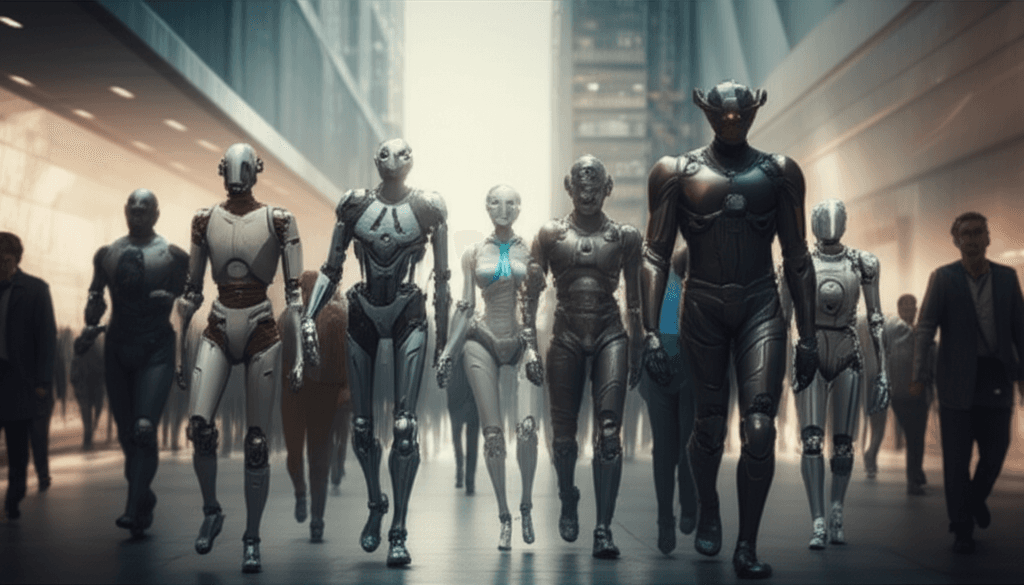
The Ethics of Autonomous Robots: Safety, Liability, and Trust in Human-Robot Coexistence
As robots move from factories into our homes, hospitals, and public spaces, the ethical questions surrounding autonomous machines are no longer theoretical. They're urgent.
The Core Ethical Challenges
1. The Responsibility Gap
When an autonomous robot causes harm, who is responsible?
- The manufacturer who built the hardware?
- The AI developer who trained the model?
- The deployer who put the robot in that environment?
- The robot itself — can an AI agent bear responsibility?
This "responsibility gap" is one of the most pressing legal questions in technology today. Unlike traditional product liability, where a defective product has a clear causal chain, autonomous AI systems make decisions that their creators cannot always predict.
Current legal frameworks are struggling to keep up:
- The EU AI Act (2024) classifies high-risk AI systems and requires conformity assessments
- The US has no comprehensive federal AI legislation, relying on sector-specific guidance
- Japan has taken a more permissive approach, prioritizing innovation with soft guidelines
- China requires algorithm registration and risk assessments for AI systems
2. Autonomous Weapons
The development of lethal autonomous weapons systems (LAWS) raises fundamental questions about the role of human judgment in life-and-death decisions:
- Should a machine ever make the decision to use lethal force?
- Can autonomous weapons comply with international humanitarian law?
- How do we prevent an autonomous arms race?
The Campaign to Stop Killer Robots, supported by over 180 organizations, advocates for a preemptive ban on fully autonomous weapons. Yet major military powers continue to develop autonomous combat systems.
3. Labor Displacement
As robots become more capable, the impact on employment grows:
| Sector | Jobs at Risk | Timeline | Mitigation Potential |
|---|---|---|---|
| Manufacturing | 20M globally | 2025-2030 | High (reskilling) |
| Warehousing | 8M globally | 2025-2028 | Medium |
| Transportation | 15M globally | 2028-2035 | Medium (transition time) |
| Food service | 5M globally | 2030-2035 | Low-medium |
| Healthcare aid | 3M globally | 2030-2040 | High (augmentation) |
The question isn't whether automation will displace jobs — it will. The question is whether society will manage the transition equitably.
4. Privacy and Surveillance
Robots equipped with cameras, microphones, and sensors collect enormous amounts of data:
- Home robots observe private family life
- Delivery robots map neighborhoods in detail
- Security robots conduct continuous surveillance
- Healthcare robots handle sensitive medical information
Who owns this data? How long is it stored? Who can access it?
5. Algorithmic Bias
AI systems inherit biases from their training data. For robots, this can have physical consequences:
- Facial recognition systems performing worse on darker skin tones
- Voice assistants struggling with non-native English speakers
- Navigation systems that work better in wealthy neighborhoods (better mapping data)
Building Trust in Human-Robot Coexistence
Transparency
Robots should be able to explain their decisions:
- "I stopped because I detected a person in my path"
- "I chose this route because the alternative had obstacles"
- "I am uncertain about this object and am proceeding cautiously"
Predictability
Humans need to understand and predict robot behavior. This means:
- Consistent behavior in similar situations
- Clear signaling of intent (turn signals, eye gaze, sound cues)
- Graceful degradation when systems fail
Control
Humans must maintain meaningful control over autonomous systems:
- Emergency stop mechanisms on all robots
- Override capabilities for human operators
- Containment — limiting robot autonomy to appropriate domains
- Monitoring — continuous oversight of autonomous operations
Standards and Certification
The robotics industry needs comprehensive safety standards:
- ISO 13482 — safety for personal care robots
- ISO 10218 — safety for industrial robots
- UL 4600 — safety for autonomous products
- IEEE 7000 — ethical design of autonomous systems
The Asimov Problem
Isaac Asimov's Three Laws of Robotics make for great science fiction but terrible engineering specifications:
- A robot may not injure a human being — but what about indirect harm through inaction?
- A robot must obey orders — but what if orders conflict with safety?
- A robot must protect its own existence — but at what cost?
Real robot ethics requires nuanced, context-dependent reasoning — not rigid rules. This is exactly what makes it so challenging.
A Path Forward
Short-term (2026-2028)
- Mandatory safety testing for consumer robots
- Liability frameworks for autonomous systems
- Transparency requirements for AI decision-making
- Industry-led safety standards and best practices
Medium-term (2028-2032)
- International treaty on autonomous weapons
- Comprehensive data privacy regulations for robots
- Workforce transition programs at scale
- Robot "ethics by design" becoming industry standard
Long-term (2032+)
- Legal personhood debates for highly autonomous AI
- Universal basic income discussions tied to automation
- Global governance frameworks for advanced AI systems
- Mature human-robot social norms
Conclusion
The ethics of autonomous robots isn't a problem to be solved once — it's an ongoing conversation that must evolve as the technology does. Engineers, policymakers, ethicists, and the public all have roles to play. The decisions we make in the next few years will shape how humans and robots coexist for decades to come.
The most important ethical principle for roboticists: the fact that we can build something doesn't mean we should — but it also doesn't mean we shouldn't. The answer lies in how we build it.
Related Posts
Drone Swarms for Search and Rescue: How Autonomous Fleets Are Saving Lives
Inside the technology powering autonomous drone swarms for disaster response. Multi-agent coordination, thermal imaging, and real-time mapping are transforming how we find and rescue people in emergencies.
The Open Source AI Debate: Should the Brains of Our Robots Be Open or Closed?
An opinion on the open vs. closed source AI debate in robotics, examining safety, innovation, and what the future of robot intelligence should look like.