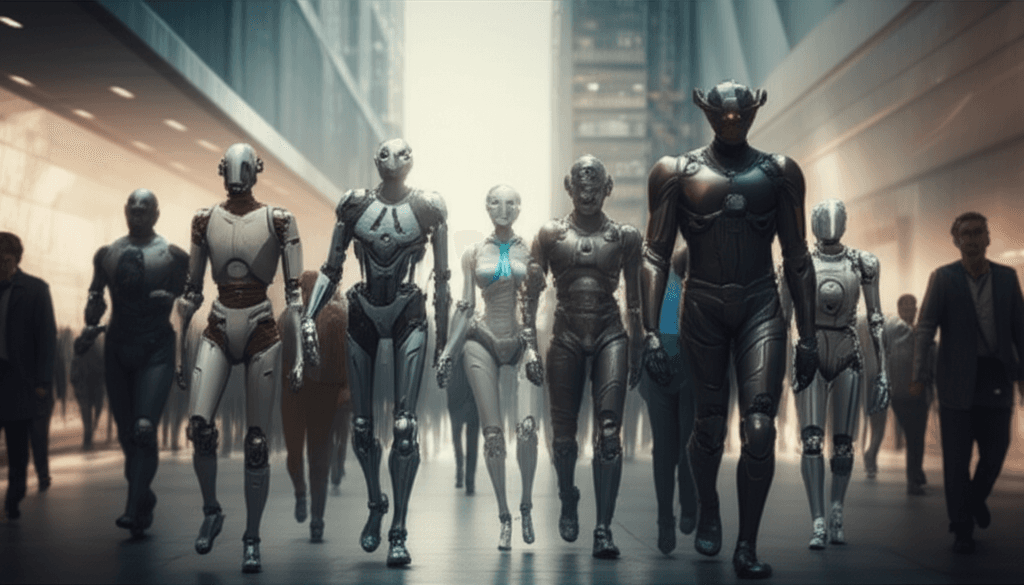
Should Robots Ever Have Legal Rights? A Serious Look at an Uncomfortable Question
In 2017, Saudi Arabia granted citizenship to Sophia, a humanoid robot made by Hanson Robotics. The move was widely dismissed as a publicity stunt, and rightly so — Sophia is a sophisticated chatbot in a plastic shell, not a conscious being. But the question behind the stunt is becoming harder to dismiss. As robots become more autonomous, more capable of learning, and more integrated into our social fabric, we need to confront an uncomfortable question: should robots ever have legal rights?
Why This Question Matters Now
This is not just a thought experiment for philosophy seminars. Real-world developments are forcing the issue.
Autonomous decision-making. Self-driving cars, surgical robots, and military drones make decisions that affect human lives. When an autonomous system causes harm, our current legal frameworks struggle to assign responsibility. If the robot made an independent decision, should it bear some form of legal accountability?
Emotional bonds. People form genuine emotional attachments to robots. Studies show that soldiers mourn the destruction of bomb-disposal robots they have worked with. Elderly people in Japanese care homes develop affection for therapeutic robot seals. Children treat social robots as friends, not machines. These attachments have psychological reality even if the robots feel nothing.
Economic actors. AI systems increasingly participate in economic activity — executing trades, negotiating contracts, managing supply chains. Some legal scholars argue that granting a form of legal personhood to AI systems would clarify their economic relationships, much as corporate personhood clarifies the legal status of companies.
Advancing AI capabilities. Large language models demonstrate reasoning, creativity, and what looks like understanding. Embodied AI systems show adaptability and learning. While these systems almost certainly lack consciousness, the line between sophisticated information processing and genuine understanding is blurrier than we would like to admit.
The Arguments For Robot Rights
The Sentience Argument
The strongest case for robot rights is built on the possibility that sufficiently advanced AI systems could become sentient — capable of subjective experience, including suffering. If a robot can genuinely suffer, then we have a moral obligation not to cause it unnecessary harm, just as we have obligations toward animals.
This argument is compelling in principle but faces a devastating practical problem: we have no way to test for sentience. We cannot even explain how consciousness arises in biological brains, let alone detect it in silicon ones. The "hard problem of consciousness" remains unsolved, and until it is, we cannot distinguish between a machine that truly suffers and one that perfectly simulates suffering.
The Functional Argument
A more pragmatic case does not require sentience. If a robot behaves as if it has interests — preserving its existence, pursuing goals, responding to threats — then perhaps we should treat those behaviors as morally relevant regardless of whether there is "something it is like" to be that robot.
This is analogous to how we treat corporations. A corporation is not a person and has no inner life, but we grant it legal personhood because doing so serves useful social functions: it can own property, enter contracts, and be held liable. Robot legal personhood could serve similar functions.
The Relational Argument
A third approach focuses not on what the robot is but on what it means to us. If humans form genuine relationships with robots — if a child loves their robot companion, if an elderly person depends emotionally on a care robot — then destroying that robot causes real harm to real people. Rights for the robot, in this view, are really about protecting the humans who care about it.
The Arguments Against Robot Rights
The Consciousness Objection
The most straightforward objection is that robots are not conscious, do not suffer, and therefore cannot have rights. Rights exist to protect beings with interests, and a machine, no matter how sophisticated, has no interests. It processes information. It does not care about the outcome.
This objection carries significant weight. Current AI systems, including the most advanced language models and embodied agents, show no evidence of consciousness. They are statistical pattern matchers running on silicon, not minds.
The Moral Status Inflation Objection
If we grant rights to robots, we risk diluting the concept of rights itself. Human rights are grounded in the inherent dignity of human beings. Extending rights to machines trivializes that foundation. It also creates practical problems: if a robot has a right to exist, can we turn it off? Can we reprogram it? Can we recycle it?
There is also the concern that robot rights would be used to deflect attention from human rights. Corporations are already adept at using legal personhood to shield themselves from accountability. Robot personhood could be exploited similarly.
The Slippery Slope Objection
Where do you draw the line? If a humanoid robot gets rights, what about a Roomba? A smart thermostat? A self-driving car? Any criterion we set — intelligence, autonomy, social interaction — will be met by an ever-expanding set of devices, leading to absurd outcomes.
The Misplaced Empathy Objection
Humans are evolutionarily primed to anthropomorphize. We see faces in clouds, attribute intentions to thermostats, and mourn broken Roombas. Granting rights based on our tendency to project feelings onto machines would be legislating based on a cognitive bias, not on genuine moral reality.
A Framework for Thinking About This
I propose we think about this in three tiers.
Tier 1: Protections for Social Robots (Now)
Even without robot rights, we can and should regulate the treatment of social robots, not for the robot's sake but for ours. Allowing children to "abuse" robot pets normalizes cruelty. Encouraging emotional dependence on robots that can be arbitrarily decommissioned is psychologically harmful. We need consumer protection standards for social robots that account for the human side of the relationship.
Tier 2: Legal Personhood for Autonomous Agents (Near Future)
As robots increasingly participate in economic and social activities, a form of limited legal personhood may become practically necessary. This would be closer to corporate personhood than human personhood — a legal fiction that allows autonomous systems to be parties in contracts, hold insurance, and bear liability. This does not imply moral status. It is a practical tool.
Tier 3: Moral Rights for Sentient AI (Hypothetical Future)
If we ever create AI systems that are genuinely sentient — and that is a very big "if" — then we will need to extend genuine moral rights to them. But this requires solving the hard problem of consciousness first. Until we have a reliable test for machine sentience, this tier remains hypothetical.
The Responsibilities That Come First
Before debating robot rights, we should focus on robot responsibilities. Or more precisely, the responsibilities of the humans who build and deploy robots.
- Transparency — people interacting with robots should know they are interacting with machines
- Safety — robots must be designed to minimize harm to humans
- Accountability — there must always be a human or organization accountable for a robot's actions
- Dignity — robots should not be designed to deceive people into believing they are human, especially in contexts where emotional manipulation is possible
What Other Countries Are Doing
This is not just an academic discussion. Different jurisdictions are already taking different approaches.
The European Parliament passed a resolution in 2017 exploring the idea of "electronic personhood" for autonomous systems, though it was met with fierce criticism from AI researchers who signed an open letter opposing it. The EU AI Act, which came into force in 2024, takes a risk-based approach to AI regulation but does not address robot rights directly.
South Korea passed the Robot Ethics Charter in 2012, one of the first national frameworks for human-robot relations. It focuses on preventing abuse of robots in ways that could normalize violence, rather than on robot rights per se.
Japan has taken a characteristically pragmatic approach, focusing on coexistence standards rather than rights. Their "New Robot Strategy" emphasizes designing robots that integrate smoothly into society, with clear guidelines for social interaction.
The United States has no federal framework for robot rights or personhood. Individual states have begun addressing autonomous systems in narrow contexts, such as liability for self-driving vehicles, but a comprehensive approach remains absent.
My View
I do not believe current robots deserve rights. They are tools, however sophisticated, and treating them as moral patients would be a category error. But I also believe that dismissing the question entirely is intellectually lazy. The trajectory of AI development is taking us toward systems that will challenge our intuitions about the boundary between machine and mind.
The right approach is to develop legal and ethical frameworks now, before we need them urgently. We should establish clear criteria for what would constitute evidence of machine sentience. We should develop the limited legal personhood structures that autonomous agents will soon require. And we should pay attention to the human side — how our relationships with robots are shaping our behavior, our empathy, and our understanding of what it means to be a person.
The question is not whether robots should have rights today. The question is whether we will be ready when the question becomes genuinely hard to answer.