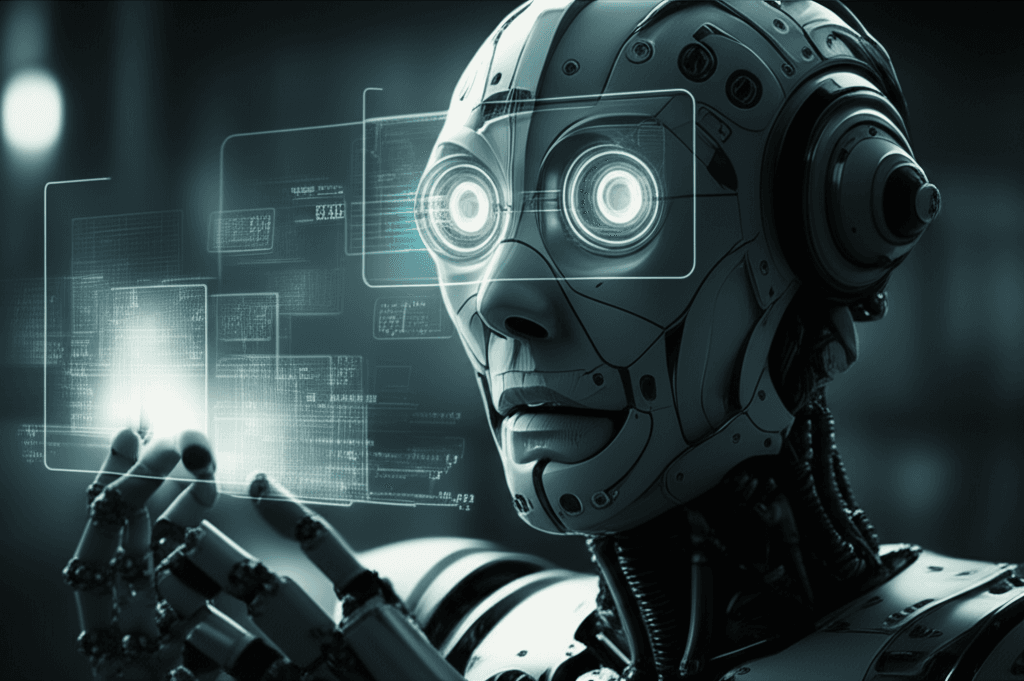
Computer Vision Breakthroughs of 2026: What's New and What's Next
Computer vision in 2026 has moved far beyond simple image classification. This year's breakthroughs are about understanding the 3D world, generating photorealistic video, and reasoning about visual scenes in real-time.
The Year's Biggest Breakthroughs
1. 3D Scene Understanding Goes Mainstream
The ability to reconstruct full 3D scenes from ordinary photos and video has matured dramatically:
3D Gaussian Splatting — first introduced in 2023, this technique has been refined to the point where you can reconstruct a complete 3D scene from a 30-second phone video in under a minute. Applications exploding in:
- Real estate virtual tours
- Robotics environment mapping
- Gaming and VR content creation
- Cultural heritage preservation
Neural Radiance Fields (NeRF) — while Gaussian Splatting has overtaken NeRF for many applications, hybrid approaches combining both achieve the best quality for complex scenes.
# Modern 3D scene reconstruction pipeline
from gsplat import GaussianModel
from scene_utils import load_images, estimate_cameras

# Load video frames and estimate camera poses
images = load_images("scene_video.mp4", fps=2)
cameras = estimate_cameras(images)  # COLMAP or DUSt3R

# Train Gaussian Splatting model
model = GaussianModel(sh_degree=3)
model.train(
    images=images,
    cameras=cameras,
    iterations=30_000,
    densify_until=15_000,
    learning_rate={"position": 1.6e-4, "opacity": 0.05}
)

# Render novel viewpoints
novel_view = model.render(camera_pose=custom_camera)
depth_map = model.render_depth(camera_pose=custom_camera)
2. Vision-Language Models Achieve Human-Level Reasoning
The latest multimodal models can reason about images with unprecedented sophistication:
- Spatial reasoning — "Is the red ball to the left of or behind the blue box?"
- Counting — accurately counting objects in cluttered scenes
- OCR + understanding — reading and interpreting text in context
- Scientific figure analysis — understanding charts, diagrams, and schematics
3. Video Understanding and Generation
2026 is the year video AI went from impressive demos to practical tools:
Video generation models like Sora, Veo 2, and Kling can produce photorealistic clips from text descriptions. More importantly for robotics, these models encode deep understanding of physics:
- Objects fall with gravity
- Liquids flow naturally
- Rigid objects maintain shape during collisions
- Lighting changes consistently with camera movement
Video understanding has advanced equally fast. Models can now:
- Track any object through long video sequences
- Understand cause-and-effect relationships in video
- Answer complex questions about video content
- Generate accurate textual descriptions of events
4. Zero-Shot and Open-Vocabulary Detection
The era of training custom object detectors for every new object category is ending:
- Grounding DINO 2.0 detects and segments any object described in natural language
- OWLv3 matches text queries to image regions with near-supervised accuracy
- Florence-3 provides unified vision understanding across detection, segmentation, and captioning
5. Real-Time Visual Reasoning
Edge deployment of powerful vision models has made real-time visual reasoning practical:
| Model | Parameters | Inference (Edge) | Key Capability |
|---|---|---|---|
| YOLO-World v3 | 52M | 15ms (Jetson Orin) | Open-vocabulary detection |
| MobileSAM v2 | 10M | 8ms (Jetson Orin) | Real-time segmentation |
| Depth Anything v3 | 25M | 12ms (Jetson Orin) | Monocular depth |
| EfficientViT-L3 | 40M | 10ms (Jetson Orin) | Scene classification |
Impact on Robotics
These vision breakthroughs are directly accelerating robotics:
Manipulation
Robots can now see and understand objects they've never encountered before, enabling:
- Grasping novel objects without retraining
- Understanding object affordances ("this is a handle, grab here")
- Predicting how objects will behave when manipulated
Navigation
Better 3D understanding means better navigation:
- Real-time 3D mapping from cameras alone (no LiDAR needed)
- Understanding traversability from visual appearance
- Long-range obstacle detection and classification
Human-Robot Interaction
Vision models that understand humans enable:
- Gesture recognition for intuitive robot control
- Emotion recognition for social robots
- Activity recognition for assistive robots
- Gaze tracking for predicting human intent
The Rise of Visual Foundation Models
The biggest shift in computer vision is the emergence of visual foundation models — large, general-purpose models trained on billions of images that can be adapted to virtually any visual task.
Key models defining this space:
- DINOv2 (Meta) — self-supervised visual features
- SigLIP (Google) — vision-language alignment
- SAM 2 (Meta) — universal segmentation
- 4M (EPFL) — multimodal, multi-task vision
These models are becoming the "backbone" of virtually every vision system, much like GPT became the backbone of language applications.
What's Coming in the Second Half of 2026
- Real-time 3D reconstruction on mobile devices
- Video foundation models that understand physics well enough for robot training
- Embodied visual reasoning — models that plan actions from visual input
- Surgical-grade medical imaging AI approved for clinical use
- Autonomous driving L4 expanding to new cities using vision-first approaches
Conclusion
Computer vision in 2026 is defined by three themes: 3D understanding, multimodal reasoning, and real-time edge deployment. For roboticists, this means the perception problem — long the bottleneck for capable robots — is being solved at a pace few predicted. The machines are learning to see, and what they see is transforming what they can do.
Related Posts
Understanding Transformer Architecture: The Engine Powering Modern Robotics AI
A comprehensive guide to how transformer neural networks — originally designed for language — are revolutionizing robot perception, planning, and control in 2026.
Embodied AI Foundation Models: Teaching Robots to Understand the Physical World
How foundation models like RT-2, Octo, and pi-zero are enabling robots to generalize across tasks, environments, and even robot bodies — ushering in the era of general-purpose robotic intelligence.
The Future of Humanoid Robots: From Factory Floors to Your Living Room
An in-depth look at the current state of humanoid robotics, the key players driving innovation, and what the next decade holds for human-shaped machines.
Building a Computer Vision Pipeline with OpenCV and Python
Learn to build a complete computer vision pipeline from scratch using OpenCV and Python. Covers image processing, feature detection, object tracking, and deploying your pipeline for real-time video analysis.